


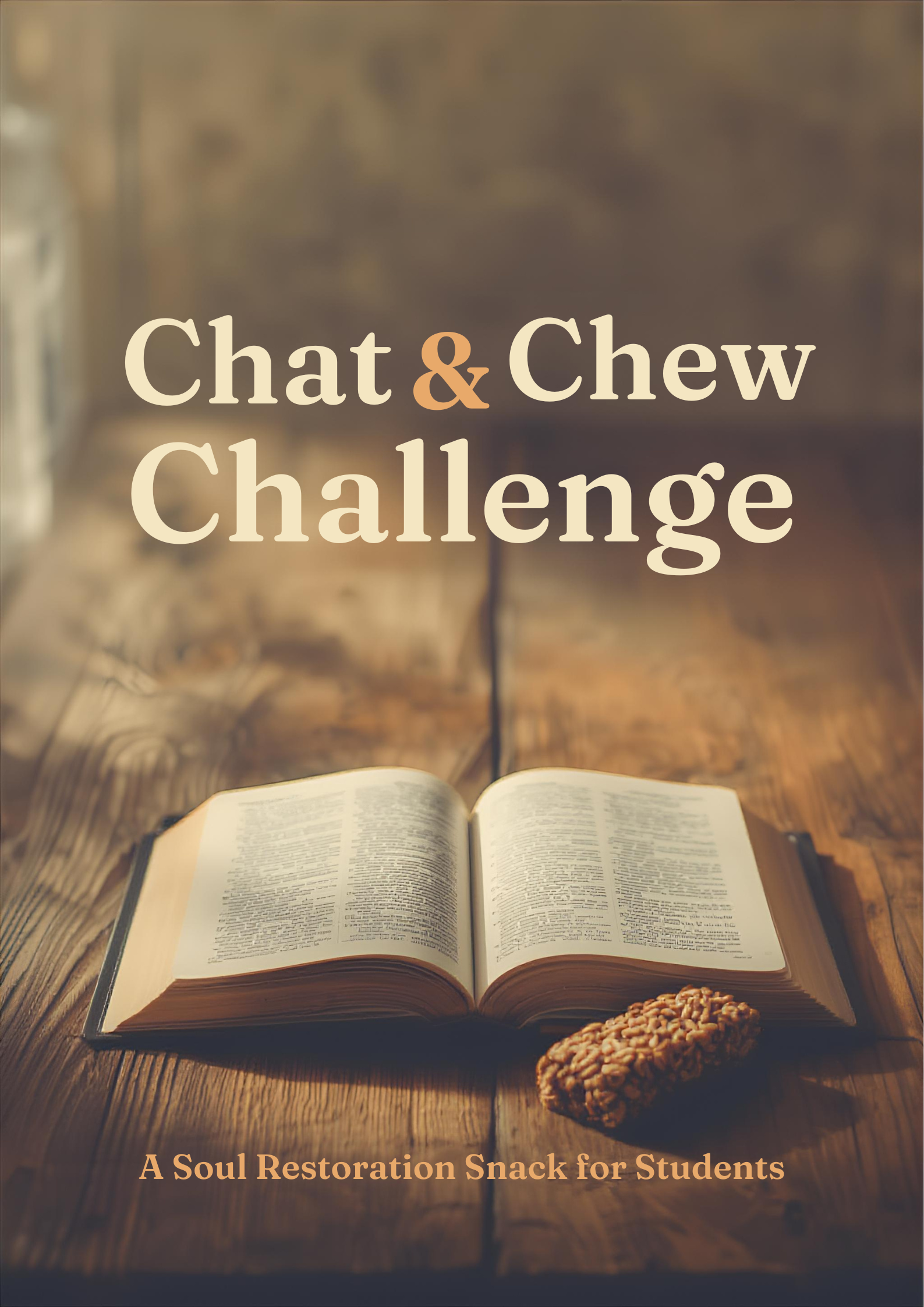
Long weekends, holidays, and unstructured breaks can be a wonderful gift… but they can also disrupt routines and make it harder for students to maintain peace, focus, and connection. To help students stay grounded, connected, and reflective over a long weekend, I introduced the Chat and Chew Challenge.
Before the break, each student received a Chewy granola bar and a simple invitation: eat one each day while reading a short passage of Scripture. The goal was not academic (there were no grades, no time limits), just a gentle opportunity for students to pause, nourish their bodies, and have a conversation with God.
Biblical Foundation
Psalm 23 reminds us:
“He maketh me to lie down in green pastures: he leadeth me beside the still waters. He restoreth my soul: he leadeth me in the paths of righteousness for his name’s sake. Thou preparest a table before me in the presence of mine enemies…” — Psalms 23:2–5
Restoration and nourishment are inseparable. The table, or even a small snack, is a place where the Shepherd renews our hearts. In the Chat and Chew Challenge, the granola bar became a simple, tangible cue: Pause. Chew. Read. Listen. Rest. Receive.
A Relational Approach
The Chat and Chew Challenge is designed to facilitate a conversation with a Friend… God. It is relational, not intellectual. Students are encouraged to reflect on Scripture in their own way:
-
- Read quietly or listen to the Bible
- Read quietly or listen to the Bible
-
- Read along with a family member if needed
-
- Share thoughts in writing or simply in their heart
Guiding questions include:
-
- What did you and God chat about today?
-
- What Scripture did you choose to read? Why?
-
- What question did you ask God while reading?
-
- Did He answer? If so, how … through the Bible, a Bible story, advice from a trusted friend, or simply waiting for a future answer?
Teacher Model Reflection
To help students see what this looks like in practice:
“Today, I ate my granola bar and read Psalm 23:1: ‘The Lord is my shepherd; I shall not want.’ I meditated on the word shepherd and even looked it up in the dictionary. I asked God why He would describe Himself as a shepherd and why I still desire things even though the Bible says the Lord being my shepherd makes me not want. After looking up the word shepherd in the dictionary, I know God describes Himself as a shepherd because He cares for me and leads me. I’m still thinking and praying about what it means not to want.”
Why This Matters
Even short, ordinary moments — a snack, a Bible passage, a few minutes of quiet — can restore the soul. Students learn that nourishment of body and soul belong together. They build:
-
- A daily rhythm of Scripture engagement
-
- Emotional regulation and peaceful reflection
-
- Independent devotional habits
-
- Awareness that God meets them in ordinary, everyday moments
Implementation Tips for Schools
-
- Offer the challenge over a long weekend, holiday, or break.
-
- Encourage participation without pressure or grading.
-
- Use reflection questions for journaling or class discussion afterward.
-
- Model participation yourself — students learn relational rhythm by example.
-
- For younger students, consider audio Bibles or family read-alongs.
Adults can use the same principle for personal reflection — see our Life Coaching version.